Simple Minimalist: The Sans-Serif for Modern Branding
There is a specific kind of visual silence that commands attention. It’s the white space on a high-fashion magazine cover, the stark architecture of a modern gallery, or the confident restraint of a luxury brand’s logo. In a world saturated with noise, the most powerful statement is often the most deliberate one. This principle is at the heart of Simple Minimalist, a premium bold sans-serif typeface engineered for clarity and impact. It’s not just a font; it’s a strategic design tool for anyone whose brand or project thrives on a foundation of modern sophistication and uncluttered confidence.
Understanding the Font's Visual DNA
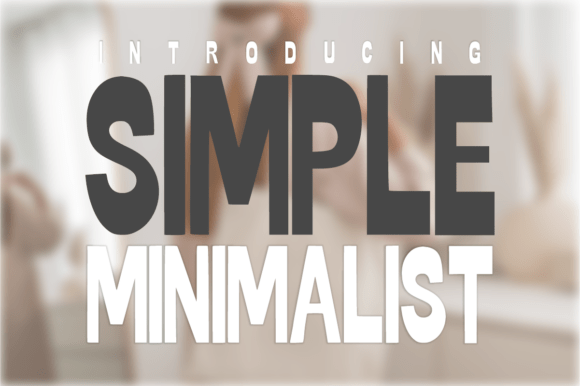
At its core, Simple Minimalist is built on a foundation of intentional contrast. Its tall, condensed letterforms create a vertical energy that feels both structured and dynamic. The defining characteristic is its high-contrast lines—thick strokes that provide a heavy, substantial presence, juxtaposed with carefully managed negative space. This isn't a soft, rounded sans-serif; it’s a typeface with an architectural quality, featuring clean edges and a geometric backbone that communicates precision and forward momentum.
This design makes it a quintessential display font. It’s crafted to be the focal point, to carry a headline or a logo with unwavering authority. Yet, its genius lies in its versatility within that role. The same bold sans-serif weight that feels at home on the cover of a minimalist tech startup’s annual report can be deployed on the tagline of an edgy streetwear brand, proving that “minimal” does not mean “monotonous.” It’s a modern typography workhorse that adapts its context based on its supporting design elements.
From Brand Identity to Social Media: A Practical Toolkit
The true test of a premium font is its application across diverse media. Simple Minimalist excels because its design solves common visual communication challenges. For brand identity, it provides an instant foundation of professionalism. A logo set in this typeface doesn’t just look good; it feels established, credible, and designed with intent. It’s particularly effective for industries where perception is everything: luxury goods, high-end services, architecture firms, and premium consumer products.
Consider its role in packaging design. On a shelf crowded with visual clutter, a product that uses bold, clean typography creates an immediate point of difference. The font’s legibility ensures the product name is clear from a distance, while its aesthetic suggests quality and care. This extends seamlessly to editorial design—think of a magazine cover or a blog header where the title needs to anchor the entire layout without competing with imagery.
In the digital realm, its value is equally pronounced. For social media graphics, where you have a fraction of a second to capture a scroller’s attention, the high-impact nature of Simple Minimalist is a significant advantage. It ensures your Instagram quotes, Pinterest pins, or Facebook ads are not just seen, but remembered. On a website, it can be used for hero sections and key calls-to-action, guiding the user’s eye with purpose and clarity. It’s a creative font that performs reliably across screens and resolutions.
The Strategic Advantage: Beyond Aesthetics
Choosing a typeface is a strategic decision that impacts more than just the look of a project. Consistent use of a well-chosen font like Simple Minimalist directly contributes to brand recognition. When your audience sees that distinctive, bold silhouette repeatedly across your touchpoints—from your website to your business cards to your social media—they begin to associate that visual language with your brand’s values of clarity, confidence, and modernity.
It also addresses a critical practical need: readability. While it is undeniably bold, its letter spacing and proportions are designed to maintain excellent legibility. This is crucial for ensuring your message is delivered with maximum impact and clarity, whether it’s on a digital screen or a printed poster. A font that sacrifices readability for style ultimately fails its primary purpose. Simple Minimalist strikes that essential balance.
For designers and crafters, its compatibility with cutting machines like Cricut and Silhouette is a tangible benefit. The ultra-clean lines and smooth finish ensure that vinyl cuts, decals, and other physical applications are precise and professional. This makes it a valuable design asset for those creating merchandise, invitations, or custom signage.
Integrating Simplicity into Your Workflow
Adopting a new font is about integration, not just installation. Start by reviewing the included styles. While the bold weight is the star, having access to complementary weights or a matching serif font or script font from the same family can provide valuable flexibility for creating typographic hierarchy within a single project.
The next step is font pairing. A typeface with such a strong personality often works best when paired with something more neutral. Consider combining it with a clean, geometric sans-serif for body copy, or a refined serif for a touch of classic contrast. The goal is to let Simple Minimalist command the headlines while supporting text remains effortless to read. Always test pairings in context to ensure they work harmoniously.
Before full implementation, consider your project’s specific goals. Are you designing a web design layout that needs to load quickly and look sharp? Are you creating a print material like a poster where the text will be viewed up close? Understanding the context will help you make informed decisions about font size, spacing, and color application. Finally, always verify the commercial licensing terms to ensure your use case is covered, whether for client work, personal projects, or merchandise.
In the end, the power of a typeface like Simple Minimalist lies in its ability to communicate more with less. It doesn’t need elaborate ornaments or complex curves to make a statement. Its strength is in its restraint, its confidence in its own structure. For the designer, entrepreneur, or creator seeking to build a visual language that is both impactful and intelligently composed, it offers a direct path to achieving that goal. It’s a tool that doesn’t just decorate your message—it defines how it’s perceived.