Spruce: The Slab Serif Font with a Confident Voice
A Typeface That Commands Attention Without Shouting
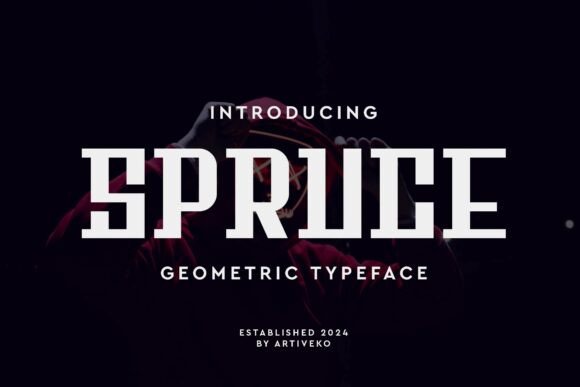
There’s a particular kind of visual authority that comes from thick, blocky serifs and carefully balanced proportions. Spruce delivers exactly that. This bold slab serif font sits at the intersection of strength and sophistication, carrying a personality that feels both rooted in typographic tradition and entirely at home in contemporary design. If you’ve been searching for a typeface that can anchor a brand identity, elevate a headline, or bring instant credibility to packaging, Spruce deserves a serious look.
What makes a font memorable isn’t just how it looks in isolation—it’s how it performs across different contexts. A strong display font needs to hold its own on a billboard, remain legible at smaller sizes on a product label, and still feel cohesive when paired with a clean sans serif on a website. Spruce was built with this kind of versatility in mind. Its thick, block-like serifs give each letterform a grounded, substantial weight, while the overall letter spacing and proportions keep things balanced and readable. The result is a typeface that projects confidence without feeling heavy-handed or overly decorative.
Where Bold Typography Meets Real-World Projects
Think about the last time a piece of packaging caught your eye from across a store aisle. Chances are, the typography played a significant role. Slab serif fonts like Spruce have long been favorites in packaging design because they combine visual impact with clarity. The bold strokes and sturdy serifs create a sense of reliability—qualities that consumers subconsciously associate with quality and trustworthiness. Whether you’re designing labels for artisan goods, crafting a visual identity for a food brand, or putting together a product line that needs shelf presence, a typeface with this kind of structural confidence can make a meaningful difference.
The same principles apply to logo design. A logo needs to work at dozens of sizes, from a tiny favicon to a large-format sign. Spruce’s clean geometry and strong serifs ensure that the letterforms remain distinct and recognizable whether they’re scaled up or down. For entrepreneurs building a brand from scratch, choosing a premium font like this early in the process can save countless hours of revision later. You want a typeface that grows with your business, not one you outgrow after the first year.
Editorial designers also gravitate toward slab serifs for good reason. Magazine covers, book jackets, newspaper mastheads, and feature spreads all benefit from a typeface that can command a page without relying on elaborate effects. Spruce works beautifully as a headline font in editorial layouts, especially when paired with a lighter, more neutral body typeface. The contrast creates a natural visual hierarchy that guides the reader’s eye and makes the overall design feel intentional and polished.
Building a Visual Identity Around Strong Letterforms
Consistency is one of the most underrated elements of effective branding. When every touchpoint—from your website headers to your social media graphics to your printed materials—uses the same typeface family, it creates a unified visual language that audiences begin to recognize instinctively. Spruce supports this kind of consistency because it offers enough weight and presence to work across multiple applications without losing its character.
Social media is a perfect testing ground. Instagram posts, Pinterest pins, Facebook headers, and LinkedIn graphics all demand typography that reads well at a glance. A bold serif font cuts through the noise of crowded feeds far more effectively than a thin or overly stylized typeface. Spruce’s block-like serifs and confident proportions make it a natural fit for quote graphics, promotional announcements, sale banners, and any visual content where you need the text to do the heavy lifting.
For bloggers and content creators, the right font choice can subtly shape how readers perceive your work. A modern slab serif signals professionalism and intentionality. It tells your audience that you’ve invested thought into the visual presentation of your content, which in turn builds trust. Whether you use Spruce for blog post titles, email headers, or digital product covers, it adds a layer of polish that separates amateur layouts from professional ones.
Practical Tips for Working with a Slab Serif
Choosing a font is only the first step. How you use it matters just as much. Here are a few practical considerations to keep in mind when working with a typeface like Spruce.
Font pairing is everything. A bold slab serif can feel overwhelming if it’s used for both headlines and body text. Pair Spruce with a clean sans serif or a simple serif for longer passages. The contrast will create visual interest while keeping the overall design balanced. Think of Spruce as the voice that makes a statement, and your secondary font as the one that carries the conversation forward.
Test at multiple sizes before committing. What looks stunning at 72 points on your monitor might feel cramped or overly dense at 14 points on a printed brochure. Print out samples, view them on different screens, and check how the letterforms hold up across the range of sizes your project requires. A good display font should remain legible and visually appealing at both large and moderately small scales.
Pay attention to spacing. Slab serifs tend to have a more substantial visual presence than sans serifs or scripts. Adjust your letter spacing and line height accordingly. A little extra breathing room can prevent bold typography from feeling oppressive, especially in longer headlines or multi-line arrangements.
Review the full character set. Before you start a project, take a few minutes to explore everything the font includes. Many premium fonts come with alternates, ligatures, numerals, punctuation marks, and extended language support. Knowing what’s available lets you make more creative and informed design decisions.
Understand the licensing. If you’re using Spruce for commercial work—client projects, products for sale, business branding—make sure the license covers your intended use. Most reputable font foundries offer clear licensing terms, and it’s worth reviewing them before you embed the font in digital products or distribute it across a team.
From Packaging to Posters: A Font That Works Hard
The beauty of a well-crafted slab serif is its range. Consider the variety of projects where Spruce could serve as a reliable design asset:
- Merchandise and apparel: Bold typography on t-shirts, tote bags, and hats needs to be instantly readable and visually striking. Spruce’s thick serifs deliver both.
- Event invitations and stationery: For weddings, galas, or corporate events, a confident serif font sets the tone without feeling stuffy or overly formal.
- Website headers and hero sections: The opening visual of a webpage carries enormous weight. A strong typeface in the hero area immediately establishes credibility and draws visitors in.
- Marketing collateral: Flyers, brochures, rack cards, and direct mail pieces all benefit from typography that communicates authority and clarity in a limited space.
- Digital products and templates: If you sell planners, worksheets, or design templates, incorporating a distinctive serif font adds perceived value and helps your products stand out in a crowded marketplace.
- Signage and environmental graphics: Wayfinding signs, storefront displays, and trade show banners all require fonts that read well from a distance. Slab serifs were practically invented for this purpose.
Each of these applications demands something slightly different from the typography, but the underlying need is the same: a typeface that communicates clearly, looks intentional, and supports the overall design rather than competing with it. Spruce fulfills that role with a kind of quiet authority that doesn’t need embellishment to make an impact.
Making Typography Decisions That Actually Matter
It’s easy to spend hours scrolling through font libraries, overwhelmed by the sheer number of options. The trick is to start with your project’s goals rather than personal preference. Ask yourself what you want the typography to communicate. Are you building a brand that needs to feel established and trustworthy? Are you designing packaging that needs to pop on a crowded shelf? Are you creating social media content that needs to stop someone mid-scroll?
Once you’ve clarified the goal, the font choice becomes much simpler. A typeface like Spruce makes sense when you need strength, structure, and visual presence. It’s not trying to be delicate or whimsical. It’s not a handwritten font that suggests casual intimacy. It’s not a script font that evokes elegance or nostalgia. It’s a bold, modern serif that says, “Pay attention—this matters.”
That kind of clarity in a design asset is genuinely valuable. When the typography aligns with the message, everything else falls into place more naturally. Colors feel more cohesive. Layouts feel more intentional. The overall brand identity feels more unified. And that’s ultimately what good design is about—not choosing the flashiest font, but choosing the one that serves the work best.
Take the time to experiment. Set your headlines in Spruce, try different pairings, adjust the spacing, and see how it behaves in the specific context of your project. Typography rewards patience and attention to detail. The designers and creators who understand this consistently produce work that feels more polished, more professional, and more memorable than those who treat fonts as an afterthought.