Fall in Love with the Emily Joseph Script Font
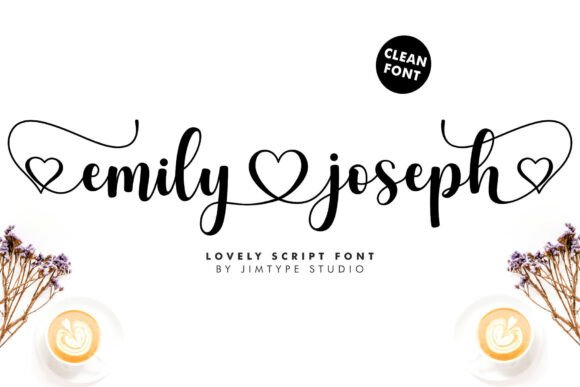
There is a specific visual language associated with romance, intimacy, and luxury that transcends spoken words. In the world of design, we often struggle to find typefaces that genuinely convey the warmth of a handwritten note without sacrificing the legibility required for professional branding. This is where the Emily Joseph font enters the conversation. It is not merely a collection of letters; it is a stylistic statement designed to evoke the feeling of a personalized, handwritten signature. With its fluid, continuous strokes and distinctive heart-shaped swashes, this typeface transforms standard text into a decorative gesture, offering a seamless blend of elegance and emotion that is difficult to replicate with standard serif or sans serif fonts.
The Anatomy of a Romantic Typeface
Understanding the visual mechanics of the Emily Joseph typeface helps in appreciating its versatility. It belongs to the category of script fonts, specifically designed to mimic the natural flow of calligraphy. The defining characteristic of this typeface is its consistency in stroke width, which ensures that even with its elaborate loops, the text remains smooth and readable. Unlike some handwritten fonts that can look jagged or erratic, Emily Joseph offers a polished, bespoke aesthetic. The connection points between letters are engineered to look organic, creating an unbroken line that guides the eye gently across the page.
For designers and entrepreneurs, the inclusion of signature heart-shaped swashes is a game-changer for sentimental projects. These swashes are not just add-ons; they are integral to the font's personality, allowing you to add a flourish to a name or a phrase that feels deeply personal. Furthermore, the font is PUA-encoded. For those outside the design industry, this simply means that all the special characters, glyphs, and alternate styles are easily accessible, even if you are using basic software like Microsoft Word or Canva. You do not need advanced design skills to unlock the full potential of this premium font.
Strategic Applications for Branding and Business
While the romantic nature of Emily Joseph is obvious, its application in commercial settings is where it truly shines for small business owners and entrepreneurs. Visual consistency is the cornerstone of brand recognition, and choosing a font that aligns with your brand’s voice is critical. If your business deals in custom jewelry, photography, wedding planning, or high-end boutique goods, this typeface serves as a foundational element of your brand identity.
Consider the logo design process. A logo needs to be memorable and convey the values of the business instantly. Using a script font like Emily Joseph for a wedding photographer or a florist immediately communicates elegance, care, and a personal touch. It tells the potential client, "We pay attention to the details, and we care about beauty." Beyond the primary logo, this font can be utilized across packaging design. Imagine a custom jewelry box where the client’s name is printed in this fluid script—it elevates a simple box into a keepsake.
Enhancing Digital and Print Presence
In the realm of marketing assets, versatility is key. The Emily Joseph font performs exceptionally well across various mediums:
- Social Media Graphics: In the scroll-heavy environment of Instagram or Pinterest, a beautiful, flowing script stands out. It is perfect for quote graphics, sale announcements, or "link in bio" reminders. The high-quality connections between letters ensure the font looks crisp even on mobile screens.
- Website Design: While body text on a website should generally remain a legible serif or sans serif font, Emily Joseph is an excellent choice for headers, hero text, and pull quotes. It adds a layer of sophistication to a web design layout without hindering the site's load time or readability when used strategically.
- Editorial Layouts: For bloggers and publishers, mixing typography is essential for visual hierarchy. Using this script font for subheadings or feature titles breaks up the monotony of standard text blocks and draws the reader's eye to key sections.
Practical Typography: Pairing and Readability
One of the most common mistakes in modern typography is the misuse of decorative fonts. While the Emily Joseph typeface is beautiful, it is a display font, meaning it is designed for impact rather than long-form reading. A practical approach to using this font involves understanding font pairing. To maintain a professional presentation and ensure readability, it is best to pair this script font with a clean, neutral typeface.
For example, if you are designing a wedding invitation, the names of the couple might be in Emily Joseph (the focal point), while the date, time, and venue details should be in a simple sans serif font like Montserrat or a classic serif like Garamond. This contrast creates a visual hierarchy that is pleasing to the eye. The script font provides the emotion, while the secondary font provides the necessary information without competing for attention.
When testing your pairings, consider the legibility at different scales. A script font might look stunning on a large poster but could become difficult to decipher on a small business card if the text is too small. Always print a test copy or view the design on a mobile device to ensure the "readability considerations" are met. The goal is to create an emotional connection with the viewer, not to frustrate them with illegible text.
Customization and Licensing
To get the most out of this creative font, explore the alternate characters included in the package. As mentioned, the PUA encoding allows for easy access, so you can swap out specific letters to change the flow of a word. Perhaps the standard 't' doesn't quite connect with the 'h' the way you want—chances are, there is an alternate version that solves this problem. This level of customization allows you to create designs that look truly hand-lettered and unique.
Finally, a note on professional standards: always verify the commercial licensing of the font before using it in a client project or for merchandise sales. Most premium fonts come with a license that covers specific uses, but if you plan to sell items with the font printed on them (like t-shirts or mugs), you may need an extended license. Respecting these guidelines is part of being a professional designer or business owner.
Conclusion
Ultimately, the Emily Joseph