Artezy: Where Artistic Flair Meets Effortless Sophistication
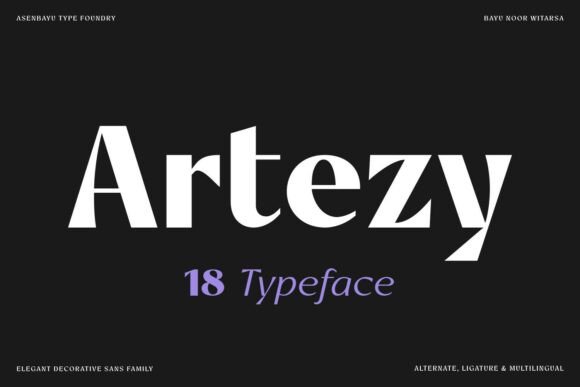
There’s a particular kind of visual tension that grabs your attention immediately—a mix of sharp precision and fluid grace. It’s the feeling you get when a brand feels both contemporary and timeless, when a logo feels bold yet approachable. This balance is incredibly difficult to achieve in visual communication, yet it is the exact space where the Artezy typeface family lives. Born from the fusion of "Art" and "Ease," this collection of 18 sans serif fonts doesn’t just display text; it curates an atmosphere. For anyone working in branding, publishing, or digital content creation, finding a font that bridges the gap between high-end luxury and modern usability can feel like searching for a needle in a haystack. However, by focusing on high-contrast aesthetics and versatile weights, this family offers a compelling solution for projects that demand to be noticed.
Decoding the Aesthetic: High Contrast and Modern Geometry
When we talk about typography in the context of luxury branding, we often default to thinking about traditional serif fonts—think of the mastheads of old fashion houses or the lettering on expensive wine bottles. While serifs have their place, the modern design landscape has shifted. Today’s luxury is defined by clean lines, negative space, and architectural structure. This is where the Artezy collection shines. It is a sans serif font at its core, but it borrows the "stress" or contrast usually found in calligraphy and serif typefaces.
What does that mean for you practically? It means the thick and thin strokes within the letters have a significant difference. This technique adds a rhythmic movement to the text that a standard, uniform sans serif (like Helvetica or Arial) lacks. It creates a dynamic visual appeal that feels expensive without being stuffy. If you are designing a logo for a boutique hotel, a high-end cosmetics line, or an architectural firm, this font style provides that "expensive" look instantly. It manages to feel futuristic while retaining a sense of elegance, making it a versatile display font for headlines that need to command authority.
From Screen to Shelf: Versatility Across Mediums
One of the most common pitfalls in design is choosing a typeface that looks beautiful in a mockup but fails in real-world application. A font might look great on a business card but become illegible on a mobile website, or it might look stunning on a poster but lack the weight needed for packaging design. The strength of the Artezy family lies in its comprehensive offering of 18 distinct styles. This variety allows for seamless transitions across different mediums without losing the brand's core identity.
For web design, the geometric structure and open counters (the openings inside letters like 'e' or 'a') ensure readability even at smaller sizes on high-resolution screens. It strikes a balance between being a creative font and a functional one. Consider the user experience: when a visitor lands on your homepage, the typography sets the tone before they even read a word. Using a font with a sophisticated x-height and modern styling can subconsciously signal to the user that your brand is professional and trustworthy.
In the realm of print materials and editorial design, the high contrast comes alive. Think of a magazine spread for a tech startup or a luxury travel feature. The lighter weights of the family can be used for body text to create an airy, breathable feel, while the bolder, black weights can be used for massive pull quotes that pop off the page. Because it is a premium font, the vector paths are clean, ensuring crisp printing even on textured paper stock where ink might spread slightly.
Building a Brand Identity with Artezy
Typography is the voice of your brand. Choosing a typeface is less about what looks "pretty" and more about what aligns with your brand's personality. Are you trying to be disruptive and bold? Or are you aiming for quiet confidence? The visual characteristics of this font family lean toward the latter—quiet confidence with a distinct edge. It avoids the coldness of some industrial sans serifs and the casualness of a handwritten font, landing squarely in the professional, upscale category.
If you are a small business owner or an entrepreneur launching a new product line, consistency is key. You need a font that can scale from a tiny icon on an app store to a massive billboard. Because the Artezy family includes so many variations—from thin hairline weights to heavy ultra-bold versions—you can create a robust typographic hierarchy using a single family. This ensures your brand identity remains cohesive whether a customer is looking at your Instagram feed, your email newsletter, or your physical product.
Furthermore, this font is a strong contender for social media graphics. In the fast-scrolling environment of platforms like Instagram or TikTok, you have milliseconds to capture attention. The unique silhouette of the letterforms helps text stand out against busy backgrounds or lifestyle photography. It works exceptionally well for quotes, sale announcements, and headers in video content, providing that polished, "influencer" aesthetic that builds credibility.
Practical Application: Pairing and Implementation
No font is an island. Even the best sans serif font needs a partner to handle long-form reading or to add variety to a layout. When working with a high-contrast display font like Artezy, the goal is to create harmony through contrast. Because Artezy is distinct and stylish, it pairs beautifully with a neutral, low-contrast serif font or a geometric sans serif for body copy.
For example, if you are designing a marketing asset like a brochure, you might use the Bold or Black weight of Artezy for the main headline to draw the eye. For the sub-headline, you could use the Light weight of the same family to create a connection. However, for the paragraph text—which requires high legibility over long distances—you might switch to a workhorse serif font like Garamond or a clean sans serif like Lato. This prevents visual fatigue and allows the "art" of the headline to shine without cluttering the page.
When selecting the specific style within the family, consider the mood you want to evoke. The thinner weights are excellent for invitations, magazines, and elegant labels where space is tight and sophistication is paramount. They mimic the look of engraved stationery. Conversely, the heavier weights are perfect for posters, merchandise (like t-shirts or tote bags), and packaging where you need impact and durability. The versatility allows you to mix and match within the family itself, creating a complex visual system that doesn't look chaotic.
Commercial Considerations and Final Thoughts
For designers and business owners, the technical and legal aspects of design assets are just as important as the aesthetics. When investing in a commercial font, you are paying for the time and expertise of the type designer who crafted the vectors, kerning pairs, and spacing. This ensures that your text flows correctly and looks professional in any software, from Adobe Illustrator to Canva.
It is always essential to review the licensing terms of any font you purchase. Most premium font foundries offer different licenses depending on your usage—desktop, web, or app. Ensure that the license covers your specific needs, particularly if you are creating digital products for resale or embedding the font in software. The investment in a high-quality typeface often pays for itself in the perception of quality it lends to your work. It signals to clients and customers that you pay attention to details.
Ultimately, typography is the bridge between your message and your audience. While trends come and go, the need for clear, beautiful, and functional lettering remains constant. Whether you are a content creator looking to level up your thumbnails, a brand strategist building a visual system from scratch, or a hobbyist designing a wedding invitation, the right typeface makes the work easier and the result more impactful. By blending artistic flair with effortless usability, this font collection offers a modern toolkit for anyone serious about visual communication. It proves that you don't have to choose between looking good and working well—you can, and should, have both.